Final Blog Pt.2

  1. The High-points and challenges of my experience are as follows:
    When it comes to the High-points I think I’d say when the group had its club gatherings. The atmosphere was really something else and the constant use of humor made the whole experience really entertaining. The food was a huge mixture of other cultures but all complemented each other well. When I was participating in these events I felt like I was at a large family gathering and felt very welcomed by the group. I had asked if I could bring a friend along and they were totally ok with it and treated him just as well as they had treated me. To them it didn’t matter who you were as long as you loved food and brought a few funny stories you were alright by them.
    I didn’t have very many challenges going through my research. The only pieces I struggled with were the more complex issues regarding cars that aren’t my strong suit. Another issue is the frequency of their gatherings. They’re all very busy so they can’t all always be together in the same place all the time for questions and stories. Despite that I was able to gather a lot of information from the members and I feel it all went pretty well.
    What I would do differently is get a better grip of their schedules earlier and listen closer to basic conversation for better examples. I got so caught up in the atmosphere that I’d sometimes forget that I was studying the group. Other than that I think it went well.
  2. What I learned about humor and group behavior is just how different it can all be from culture to culture. We read about it all the time but it may not click until you see it first hand. The closer you listen the more themes and subjects you notice. Things that seem simple at first end up having a complex backstory with deep meaning and significance. While I learned about how different people can be I also learned how similar we are. How people from different backgrounds can come together under the shared love for a certain aspect of life. As a group grows together they can become family and treat each other as such. To this group in particular family is much more than blood relation. Your group is your family and will always help you when you need it.
  3. What I learned from our course work is to accept ideas that seem outlandish to me more easily. I use to see something that was “weird” to me and completely put it off but now I understand that there is always a method to the madness. Deeper meanings can be found in every nook and cranny that totally change your perspective. I’m better able to put myself in the shoes of another person despite our differences. I can understand were someone is coming from and why certain groups behave the way they do. I feel that I’ve been able to grasp the idea of humor much more than I did before. I understand how it works and why people do and say what they do. It was a very interesting experience from a communication perspective.
  4. What I think worked pretty well for the assignment was the list format that was given for students to follow. It clearly laid out the core items you needed to touch on and made it easier to work through step-by-step. I also think the pacing of the project was very forgiving and smooth. I think it helped a lot of students gather their thoughts with time and really helped them think about what they’d been learning. What I think would help more in the future is if students had a better guide as to finding their groups and a basic plan for how to go about interacting with them. The guides online helped but as a person who feels more comfortable talking in person with someone I would’ve liked more hands on ideas in class. Other than that I had a really good time.

    -Posted 03/19/2020 at 11:10 AM

Final Blog Pt.1

  1. Throughout my time with the Car Club I’ve come to notice a few core subjects of humor that frequently pop up in conversation.

    I think the most common subject of humor is recalling humorous events. From what I’ve learned much of this comes from their creativity that can be seen as outlandish to outsiders. Much of what these people do differs from the norm and they wear it as a sort of badge of honor. This “weirdness” is part of who they are as a group and creates hilarious stories to recall later on.

    Another subject that is frequently used is a light form of insults or teasing. This is because within the group you’re like family and you’re almost expected to be able to dish out small harmless jabs to each other. These jokes can also have a meaning behind them. Sometimes they are used as a reminder to others that something needs to be done and other times they’re used to try to motivate another member to keep going.

    The last common subject is humor as a defense mechanism. Many of these people either have endured hardship or are currently enduring hardships and use humor to guide not only themselves but each other through it.

    When it comes to humor in general I don’t think it was absent in any of the times I sat in. From what I’ve gathered, these people love humor and much of their conversations are based off of it. For them it keeps the conversation interesting and enjoyable. Humor is encouraged throughout the group and is a very important piece of their culture. When they’re building a car, they’re joking around; When they’re eating at a restaurant together, they’re joking around; and when they’re encountering difficult scenarios, they are joking around. Humor is a core instrument in this culture.
  2. A basic definition of the terms above are as follows:

    Recollection of humorous events is pretty self-explanatory in terms of definition. It’s when one recalls a certain event or pieces of multiple events that they deem humorous. These would be brought up in conversation in the form of story telling.

    Insults and teasing in this context are small phrases or jabs at an individual based off of their current or past situation / characteristics. These are usually harmless in intent and are meant to be humorous. However sometimes they may be misinterpreted.

    Humor as a defense mechanism is when humor is used to either disconnect the user from the current situation or take the power away from the situation. This form of humor is usually used in times of struggle or difficulty.
  3. The first thing that comes to mind is when a member of the Car Club told the story of when he bought a large metal car port from a neighbor and needed to transport it. (Recollection of a humorous event) The humorous part comes in when he said how he did it. Instead of taking it apart and rebuilding it in his back yard he rigged wheels to the four corners of the car port. He then spent a couple hours with family members and neighbors shoving the whole thing out into the main road and down a side road to the back gate. The back gate was too small so he had to slowly push one side through and move it back so the other side could come through. Just before he got to the spot he wanted to put it he ran into another problem. This time there was a whole building and a tree, that couldn’t be cut down, in the way. He then cut, twisted, and bent the car port between the two object and welded it back together on the other side. The story wouldn’t have been funny if he had just said he had trouble moving a car port. The humor came from the careful delivery and ridiculousness of the situation. Both combined kept all listening laughing.

    The second example of humor within the group is the use of the phrase “Next Summer” in reference to what they say when someone asks when they’ll finally be finished with a project. (Humor as a defense mechanism / group jargon) They use this phrase to make a joke of just how long it takes on a car. The building for them usually isn’t the real issue but struggles in real life is the true roadblock. A simple phrase can be used to be a quick answer with a deep amount of reasoning. For example some cars will only take a few months to work on while recently a car that had been being worked on for decades was finally completed.
  4. How people react to humor such as this is usually in a very enthusiastic and positive tone as well as responding with even more humor that is similar to what was said. Most of the humor is used to further the conversation and improve the mood of the room despite its context. Within the group there isn’t really a bad joke to them. Humor is core to who they are and they loved most humor.
  5. From everything I’ve gathered so far humor is one of the most important aspects of this group’s culture. The members take a lot of joy in the events they share and want to keep everybody laughing. Humor is used to keep their social fire going and shine a light on the pit of despair everyone finds themselves in from time to time. Their group thrives under the guide of humor and they’re never against the idea of throwing out a joke here and there. It comes up so often it’s almost expected of you to participate in it.
  6. Humor such as those before have shown me that a majority of their humor comes from real life scenarios that occur within their lives. Their jokes come from both the good and bad of life and work off of shared experiences and the ability to relate to each other. I’ve come to this conclusion because much of what they believe to be funny comes from what they’ve done and the stories they tell about said events. Even in the case of the “Next Summer” joke it still relates to their shared frustration of not being able to finish their projects in their own lives. This is also shown within the story mentioned above. As stated before much of their humor draws from real life.
  7. If I was to describe themes of the groups humor I’d say a mixture of oddity and stories due to their major use of them. Their purpose is mainly for the enjoyment of the group and improvement of mood. Someone outside the group should be able to understand a majority of the humor because it is mostly told in a story format that is easy to follow and emphasizes their key points. It has been shown to follow a step-by-step process. As for other jokes like “Next Summer” they may need some back story but aren’t too hard to comprehend.
  8. I believe that the purpose of humor for the group has always been to improve the mood of the group and increase enjoyment. This group is made of friends and family that have been together for a majority of their lives and know what each other have gone through. Humor has never made one person higher than another and hasn’t been used as a form of power. The group does have a President but the position is not used to have power over anyone. The group treats each other as family and each member is equal. They help each other despite age, race, or religion. No one claims to be better than anyone else and the idea would be considered disrespectful to even attempt it. They work for the betterment of each other and share the love of cars.

    -Posted 03/18/2020 at 5:22 PM

Blog Post #2: Joking Culture

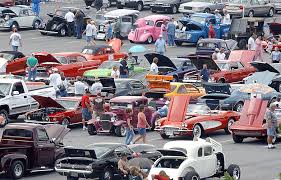
  1. I’ve decided to delve deeper into US Classic Car Club (Cars that are mainly around 1920 – 1975) joking culture. I chose this group because people close to me have been heavily involved within the culture for a large portion of my life but I had never really stopped and looked closely at it. I wanted to see how everyone within the group interacts with each other versus how they interact with those outside of it. Fieldwork will include going to group gatherings such as car shows and meetings, visiting with multiple members within the group, and listening in on conversations in the garage.
  2. During fieldwork I will not reveal the identities of the individuals within the club and / or the locations in which they hold meetings and live. I will share the locations of public events such as car shows but only because of their open nature. I will not be giving descriptions of the vehicles or those who own them in order to protect their privacy. All of this will be done to ensure the anonymity and safety of those being studied.
  3. From what we’ve learned in class so far I believe I have a good platform to jump off of so I may begin to tackle this project. What I’ve learned so far on Joking Culture itself and the language behaviors of those within small groups show prove vital to this study. What I know so far is that this culture primarily acts as a form of artistic expression and is shared over multiple groups across multiple countries around the world. These various groups differ on style, personal presentation, and background. From what I’ve gathered so far the specific group I’m studying has a very causal nature to it and have humor that ranges from small joking jabs at one another all the way to some brutal stuff. With this in mind they mostly focus on their work and tend to express themselves through it. These people can spend upwards of a year or more working on these custom vehicles from the ground up and of course they take them very seriously. I’m very interested in where this study will lead me and I’m hoping to see what it’s like stepping into it all with them.

Introduction

  • Hello, my name is Wyatt Hall! The whole purpose of this blog is to explore the role of humor within culture under the guise of Anthropology.

  • In regards to said role we’ve already begun studying the topic via things such as a Ted Talk by Sophie Scott on why we laugh, in class discussions, and other informative articles on said topic. What interested me the most so far was the Ted Talk I had mentioned earlier. I think it is interesting that there are tell-tale signs of human behavior in regards to humor. For example you can naturally tell the difference between a real laugh and a fake laugh due to a form of unconscious thought that can detect a genuine laugh. To go with this the culture differences interest me greatly because under this study it is no longer just what is funny; it is what is funny in what context and why? Thinking about what we believe to be funny in depth is bound to open up new ways of looking at life.

  • Like I said earlier we are currently in the process of learning about how to detect differences in the way humor is expressed across cultures. Soon we will take the knowledge we’ve gathered and focus in on a cultural subgroup and begin the process of studying their usage of humor. We will take time visiting amongst the group and get a good idea of how humor plays a part in their culture. Of course we will get the group’s permission, maintain the groups anonymity, and remain respectful the whole time. Personally I would like to obtain permission to visit with a subgroup and see if I can start to understand the world through their eyes. As stated before this is mainly all for the future and for now we’re focusing on being able to identify before moving on.

Thank you all for reading and I will be sure to keep you up to date as the project develops!

Introduce Yourself (Example Post)

This is an example post, originally published as part of Blogging University. Enroll in one of our ten programs, and start your blog right.

You’re going to publish a post today. Don’t worry about how your blog looks. Don’t worry if you haven’t given it a name yet, or you’re feeling overwhelmed. Just click the “New Post” button, and tell us why you’re here.

Why do this?

  • Because it gives new readers context. What are you about? Why should they read your blog?
  • Because it will help you focus you own ideas about your blog and what you’d like to do with it.

The post can be short or long, a personal intro to your life or a bloggy mission statement, a manifesto for the future or a simple outline of your the types of things you hope to publish.

To help you get started, here are a few questions:

  • Why are you blogging publicly, rather than keeping a personal journal?
  • What topics do you think you’ll write about?
  • Who would you love to connect with via your blog?
  • If you blog successfully throughout the next year, what would you hope to have accomplished?

You’re not locked into any of this; one of the wonderful things about blogs is how they constantly evolve as we learn, grow, and interact with one another — but it’s good to know where and why you started, and articulating your goals may just give you a few other post ideas.

Can’t think how to get started? Just write the first thing that pops into your head. Anne Lamott, author of a book on writing we love, says that you need to give yourself permission to write a “crappy first draft”. Anne makes a great point — just start writing, and worry about editing it later.

When you’re ready to publish, give your post three to five tags that describe your blog’s focus — writing, photography, fiction, parenting, food, cars, movies, sports, whatever. These tags will help others who care about your topics find you in the Reader. Make sure one of the tags is “zerotohero,” so other new bloggers can find you, too.

Design a site like this with WordPress.com
Get started